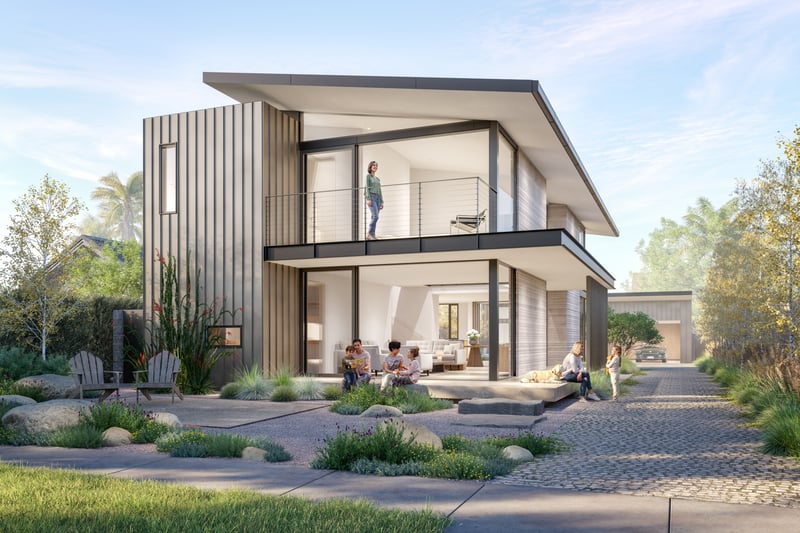
Resilience in residential design is often reduced to individual features such as fire-rated materials, hardened envelopes, and backup power. In practice, resilient homes perform best when resilience is treated as a coordinated system. Site planning, structure, material choices, and everyday living patterns must be considered together, especially in areas facing increasing climate risk.
In the spirit of the original Case Study cohort of the 1940s, EYRC Architects is part of the newest iteration of the groundbreaking endeavor, Case Study: Adapt. The program's intent is to create a shared creative space for exploring a blend of “resilience, affordability, and architectural beauty” in residential design as central virtues of the rebuild efforts.
The studio is currently designing two custom homes (the Zweig Residence and the Friends Residence) for families who lost their previous residences as part of the program. Each project takes a different approach, but both begin with the same goal: creating homes that feel safe, livable, and lasting.
Together, these projects reflect a broader approach to resilient home design without sacrificing the qualities that make a house feel like home.
1. Start with the site, not just the house
A resilient home begins with how it sits on the land. Orientation, setbacks, and outdoor space planning can help slow the spread of embers and manage flood pathways while supporting passive strategies that improve daylight, airflow, and comfort.
 Friends Residence, 2025
2. How a home meets the street matters
Engaging the street is an important part of rebuilding resilient neighborhoods. At the Zweig Residence, a welcoming raised front porch replaces a garage-dominant layout that was common in the area. The porch is set back and elevated to provide privacy while maintaining a visual connection to the street, creating a comfortable threshold between public and private life for chance gatherings.
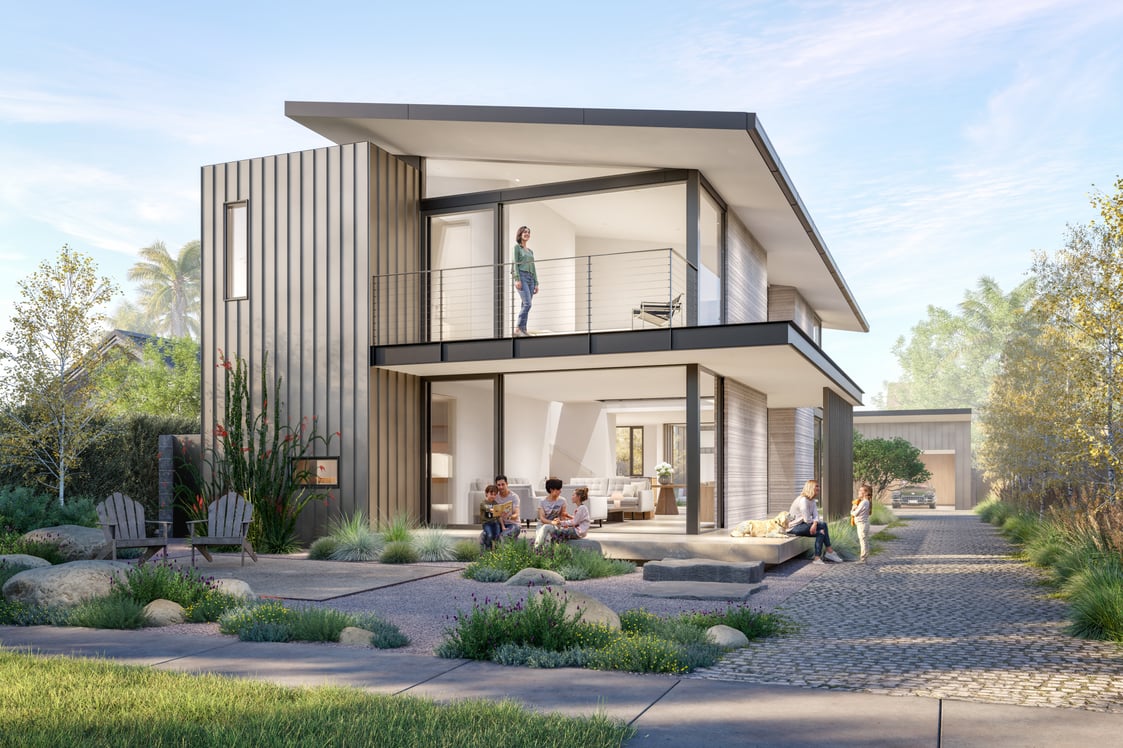 Zweig Residence, 2025
3. Structural efficiency is not a creative limitation
Simplified building shapes, fewer projections, and well-controlled openings reduce vulnerability and simplify long-term maintenance. At the Zweig Residence, stacked floor volumes minimize construction complexity and support improved fire performance. Cantilevers are used only where needed for entry cover and shading.
 Zweig Residence, 2025
4. Design for how people actually live
Resilient homes should support daily routines. At the Friends Residence, a central dining space opens to both the street and garden, encouraging natural ventilation and flexible use. The layout supports gathering, privacy, and ease of living without relying on complex systems.
 Friends Residence, 2025
5. Materials and flexibility support longevity
Durable, non-combustible exterior materials like stone, stucco, and metal form a strong protective envelope at the Friends Residence. Inside, flexible rooms allow the home to adapt over time, extending its usefulness and reducing the need for future renovation.
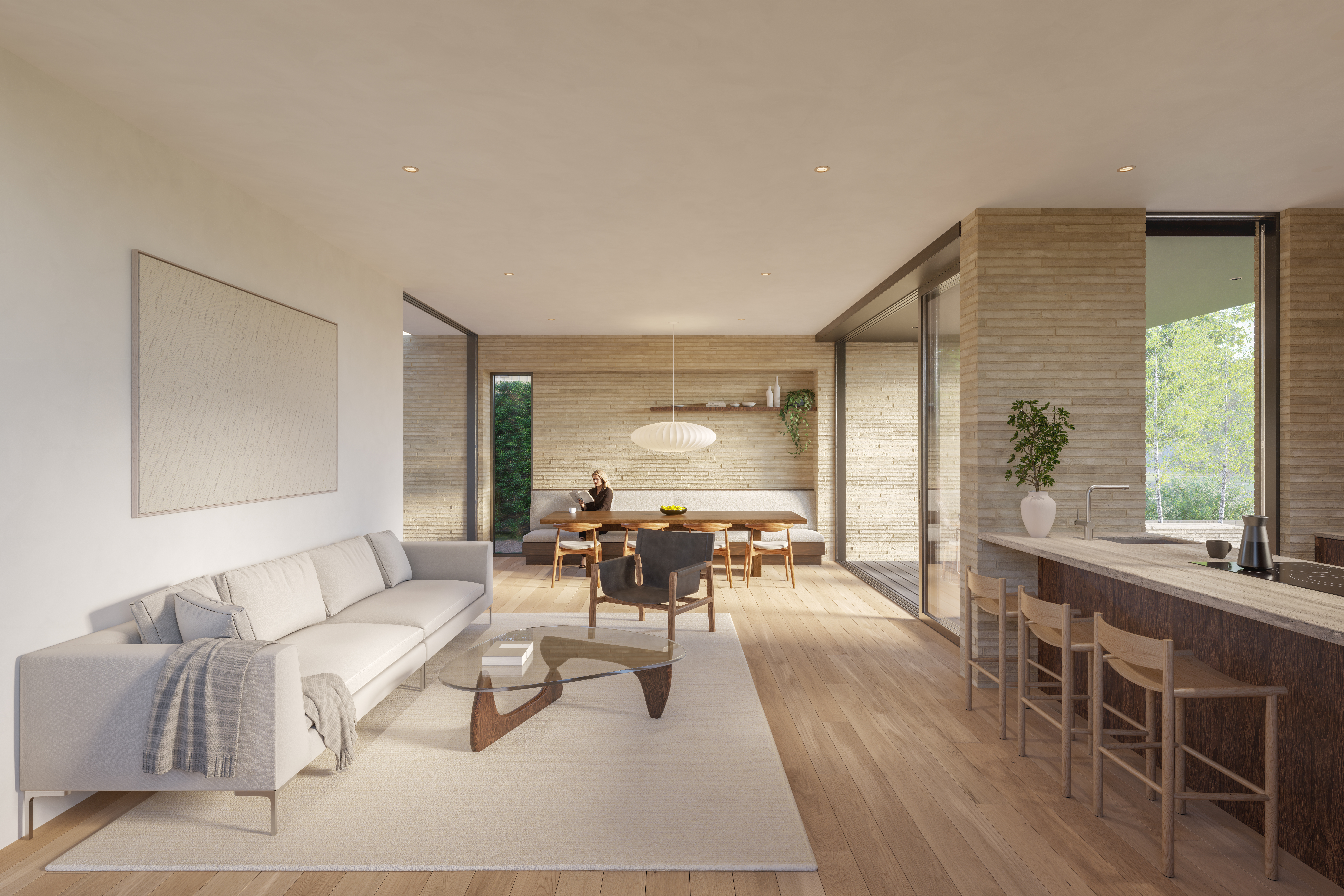 Friends Residence, 2025
To learn more about EYRC Architects’ involvement in the Case Study: Adapt program, Architectural Digest recently highlighted our work alongside other families rebuilding after the Los Angeles fires.